JUSTICENTER Personal Injury Lawyers | November 25, 2025 | Car Accidents

After a car accident, one of the first steps drivers often take is filing a claim with the at-fault driver’s insurance company. If the other party is insured through Allstate—or if you carry Allstate coverage yourself—you’ll need to follow the company’s claim process to pursue compensation for property damage and injuries.
While Allstate is a major auto insurer with national reach, that doesn’t necessarily mean the claims process is simple or straightforward. Understanding the basic steps can help protect your rights and strengthen your claim from the beginning.
Below is a clear overview of how to file a car accident claim with Allstate and what to expect along the way.
1. Gather the Information You Need Before Filing
Before contacting Allstate, make sure you have essential details about the accident. This will help streamline the reporting process and avoid delays.
Try to gather:
- The Allstate policy number (if available)
- The name and contact information of the Allstate policyholder
- Your contact and vehicle information
- The date, time, and location of the collision
- A brief description of what happened
- Photos of vehicle damage and the accident scene
- The police report number (if one was filed)
- Contact information for any witnesses
You don’t need to provide lengthy explanations—basic facts are all that’s required at this stage.
2. Report the Accident to Allstate
You can file an Allstate car accident claim through:
- The Allstate mobile app
- The company’s website
- Allstate’s claims phone line
If you are the Allstate policyholder, you may also be able to report the crash directly through your online account.
When reporting the collision, Allstate will ask for the information listed above and will create a claim file. You should avoid speculating about fault, minimizing your injuries, or giving unnecessary details. Stick to the basic facts until you’ve spoken with a lawyer.
3. Expect an Adjuster to Contact You
After the claim is opened, an Allstate claims adjuster will typically:
- Review your initial report
- Ask follow-up questions
- Request photos or documents
- Explain the next steps
In many cases, the adjuster will also ask for a recorded statement. You are not required to give a recorded statement to the other driver’s insurance company. Doing so may hurt your claim if your words are later taken out of context.
If the claim is filed with your own insurer, check your policy language before declining or agreeing to any requests.
4. Get a Vehicle Damage Assessment
Allstate may want to inspect your vehicle or ask you to visit an approved repair shop for an estimate. Some claims allow photo-based estimates submitted through the Allstate app.
You are not required to use the body shop suggested by the insurance company. Under California law, you can choose your own repair facility.
5. Track Your Medical Treatment and Injury-Related Costs
If you were injured, keep detailed records of:
- Medical appointments
- Receipts and medical bills
- Diagnostic tests
- Prescriptions
- Time missed from work
- Out-of-pocket expenses
Insurance companies—including Allstate—evaluate injury claims based on documentation. Keeping detailed records strengthens your case and helps ensure that you pursue full compensation.
6. Be Cautious With Settlement Offers
Allstate adjusters may offer a quick settlement, especially in injury claims. These early offers are usually much lower than the full value of your losses.
Before accepting anything, consider:
- Do you know the full extent of your injuries?
- Are you still receiving medical treatment?
- Do you know whether you will need future care?
- Have you accounted for lost wages or long-term limitations?
Once you accept a settlement, you typically waive your right to pursue additional compensation—even if your injuries worsen.
7. Contact an Attorney Before Making Any Major Decisions
Insurance companies are focused on minimizing payouts—not protecting your interests. An attorney can:
- Communicate with Allstate on your behalf
- Help you avoid mistakes that could weaken your claim
- Gather evidence and crash documentation
- Evaluate the value of your claim
- Negotiate for a fair settlement
- Advise you before you accept any offer
Even if you plan to handle the initial claim yourself, a brief attorney consultation can help you understand your rights and avoid pitfalls.
Common Issues When Filing an Allstate Claim
When dealing with Allstate, claimants often report challenges such as:
- Delays in communication
- Low settlement offers
- Disputes over fault
- Requests for unnecessary documentation
- Pressure to provide a recorded statement
- Denials based on minor inconsistencies
Knowing these issues upfront can help you stay prepared and protect yourself during the claims process.
Contact JUSTICENTER Personal Injury Lawyers for a Free Consultation with a Sherman Oaks Car Accident Attorney
If you were injured in an auto accident involving an Allstate-insured driver, you don’t have to handle the claim alone. The process can be frustrating, confusing, and stacked in the insurer’s favor.
JUSTICENTER Personal Injury Lawyers can guide you through every step, handle communications with Allstate, and fight for the compensation you deserve. Contact us today at (833) 852-3600 to schedule a free, no-obligation consultation with an experienced car accident attorney in Sherman Oaks, CA.
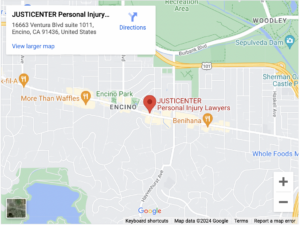
Our main office is in Encino, CA, but we serve all through Los Angeles County.
JUSTICENTER Personal Injury Lawyers
16633 Ventura Blvd suite 1011,
Encino, CA 91436